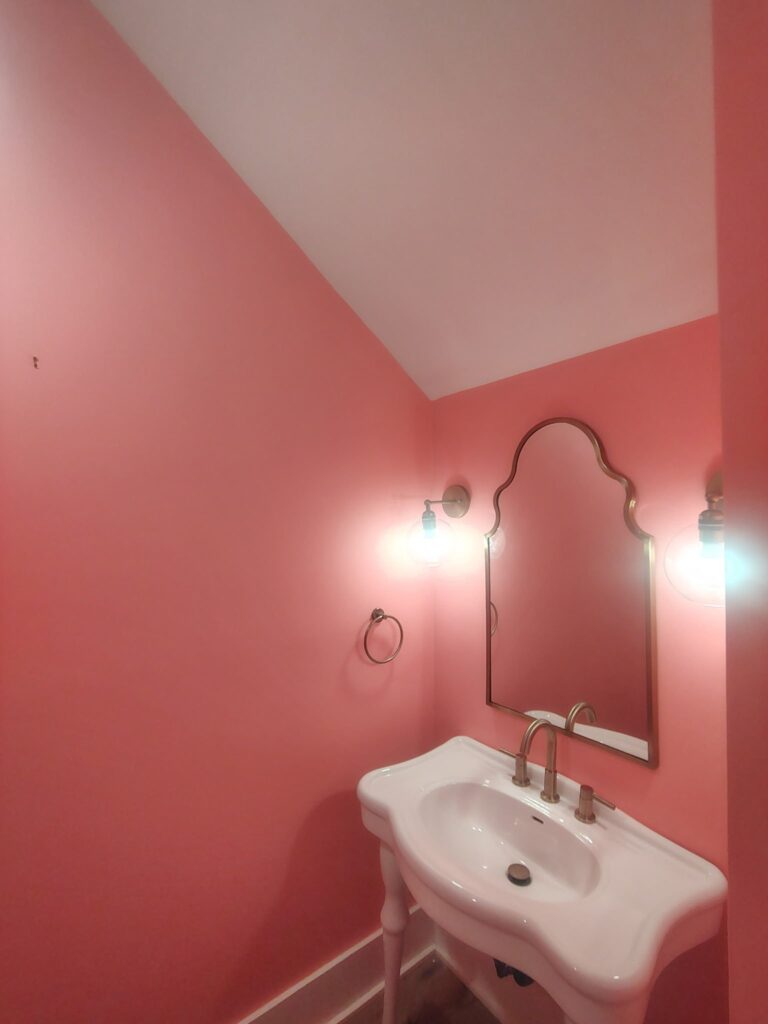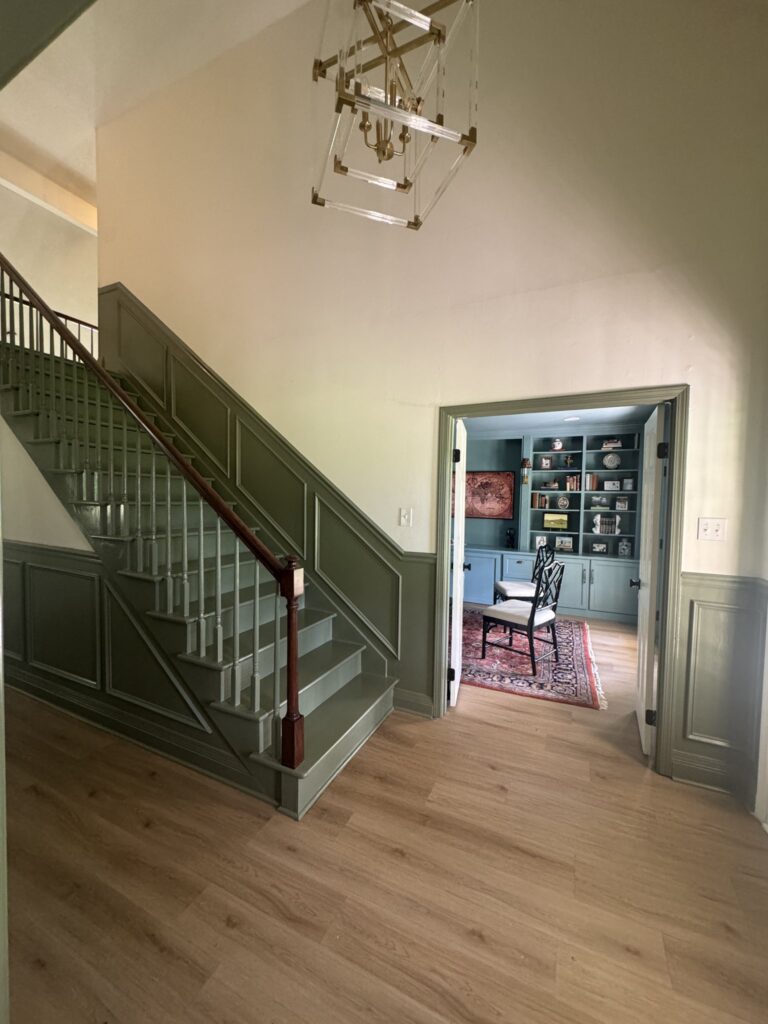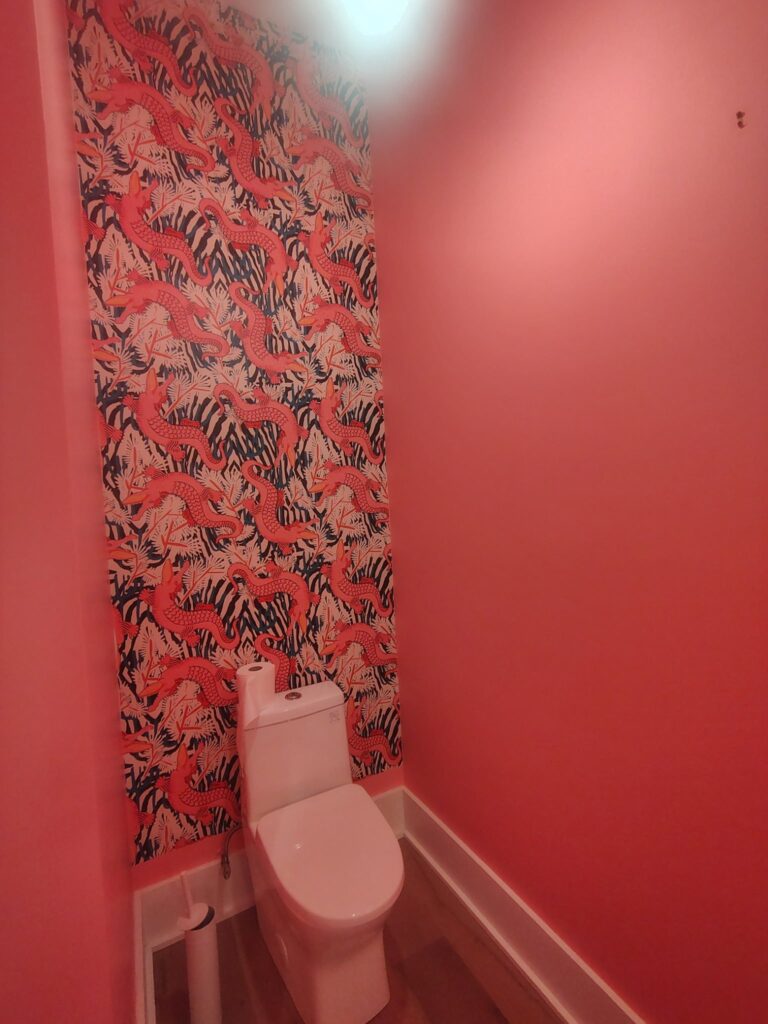
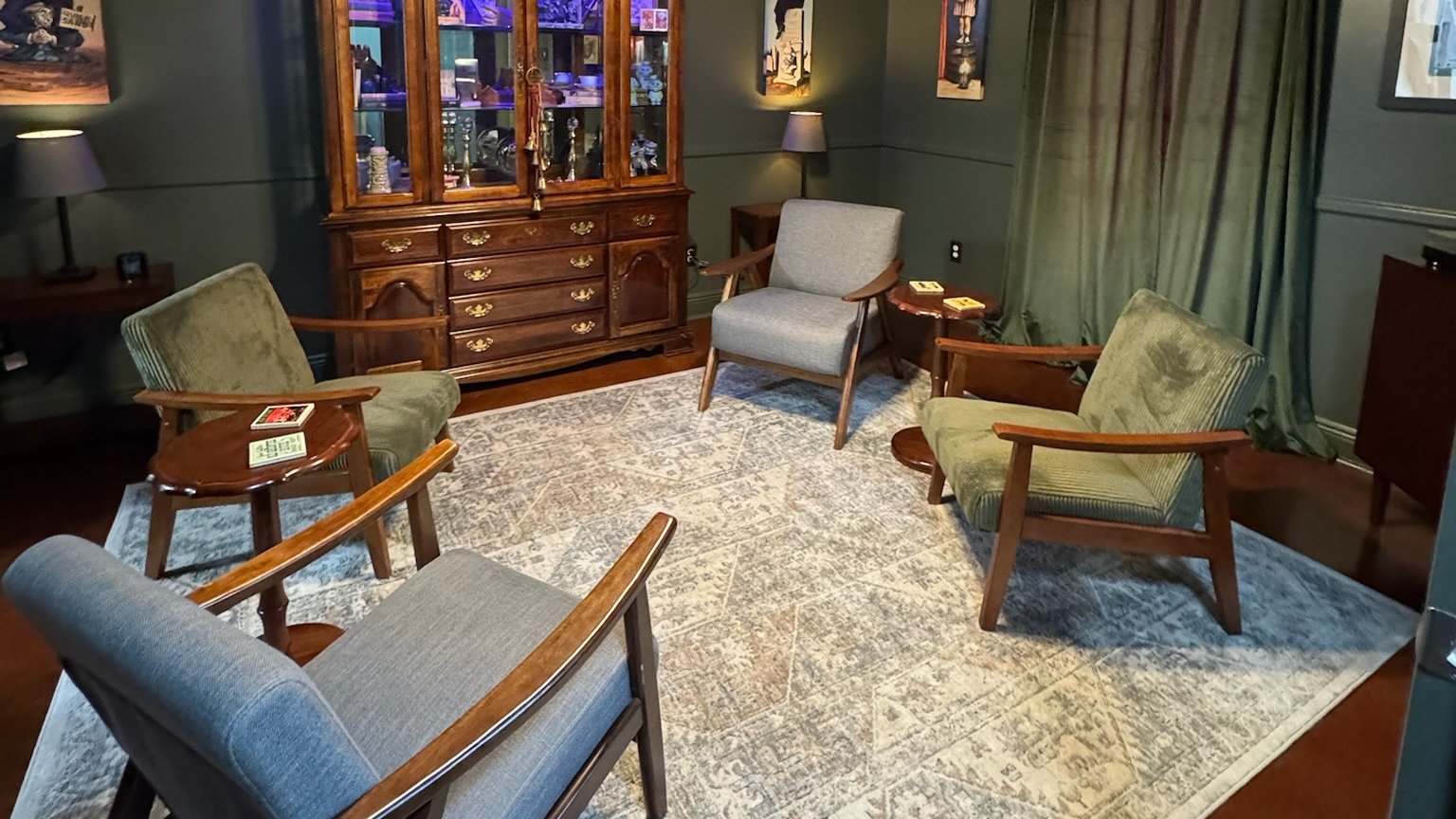
The cost to paint a house interior comes down to five things: wall and ceiling area, ceiling height, how much prep the walls need, how much trim and how many doors, and how many color changes.
An online estimator gives you a ballpark in a couple of minutes, and a walk-through gives you the exact number. Those five factors are why two houses with the same square footage can come back with very different quotes. A 1950s ranch in Lakeview and a raised shotgun in Mid-City might both be 1,400 square feet. Paint them both and you’ll see the shotgun has more wall, taller ceilings, more doors and a lot more trim. Here’s what moves the number, so you can read an estimate and know where your money goes.
What drives the cost of interior painting?
Labor drives most of it, and labor follows the surface and the prep. Paint is a smaller share than most people expect. Every factor below adds hours, and hours are what you’re paying for.
| Factor | What raises the cost | What keeps it down |
|---|---|---|
| Wall and ceiling area | Open plans, tall walls, stairwells | Smaller rooms with standard ceilings |
| Ceiling height | 12 feet and up, which means ladders, planks or scaffolding | 8 to 9 foot ceilings reached from the floor |
| Wall condition | Old anchors, water stains, peeling layers, damaged drywall | Sound drywall that needs light patching |
| Trim and doors | Tall baseboards, crown molding, built-ins, paneled doors | Simple casing and flat doors |
| Color changes | Dark to light (or light to dark), which takes extra coats | Refreshing the same color |
| Sheen and product | Semi-gloss on trim, specialty or washable finishes | One finish across walls |
| Occupied rooms | Lots of furniture to move and cover | Empty rooms, or rooms you’ve cleared of small items |
You’ll notice square footage of the house isn’t on that list. It’s a rough guide at best. What matters is the surface you can touch with a roller and a brush, and what has to happen to it before paint goes on.
Why do older New Orleans homes cost more to paint inside?
Older homes here have more surface, more trim and more prep work packed into the same footprint. Ceilings of 12 feet or more are common in shotguns and Creole cottages, so every wall is taller and every ceiling needs planks or scaffolding instead of a stepladder.
Then there’s the plaster. Original plaster walls are one of the best things about a historic house, and they don’t behave like drywall. Houses here settle, and plaster answers with hairline cracks that open back up if they’re only filled and painted. Fixing that is a job for a plaster specialist. If your walls need it, we’ll point it out at the estimate and paint after the repair.
Trim adds up fast too. Tall baseboards, door casings, transoms and a door at nearly every room in a shotgun mean more brushwork. In a lot of older homes, the trim takes as long as the walls.
One more thing changes the scope in older houses: lead. Paint in homes built before 1978 may contain lead, and federal rules under the EPA’s Lead Renovation, Repair and Painting Program set how that paint gets disturbed during prep. It affects containment, cleanup and time on the job. We cover what that means for homeowners in our guide to lead-safe painting in New Orleans.
How much of the price is prep work?
On an older home, prep can be the biggest single piece of the job, and it’s the part that decides how long the paint looks good. A clean finish over a cracked wall still shows the crack within a season.
Good interior prep usually includes:
- Moving furniture to the center of the room and covering it with drop cloths and plastic.
- Covering floors, then taping the seams so nothing slips underneath.
- Pulling old anchors and nails, then filling holes and dings.
- Patching drywall cracks, sanding patches smooth and spot-priming repairs.
- Caulking gaps where trim meets the wall.
- Priming stains or bare surfaces so they don’t bleed through.
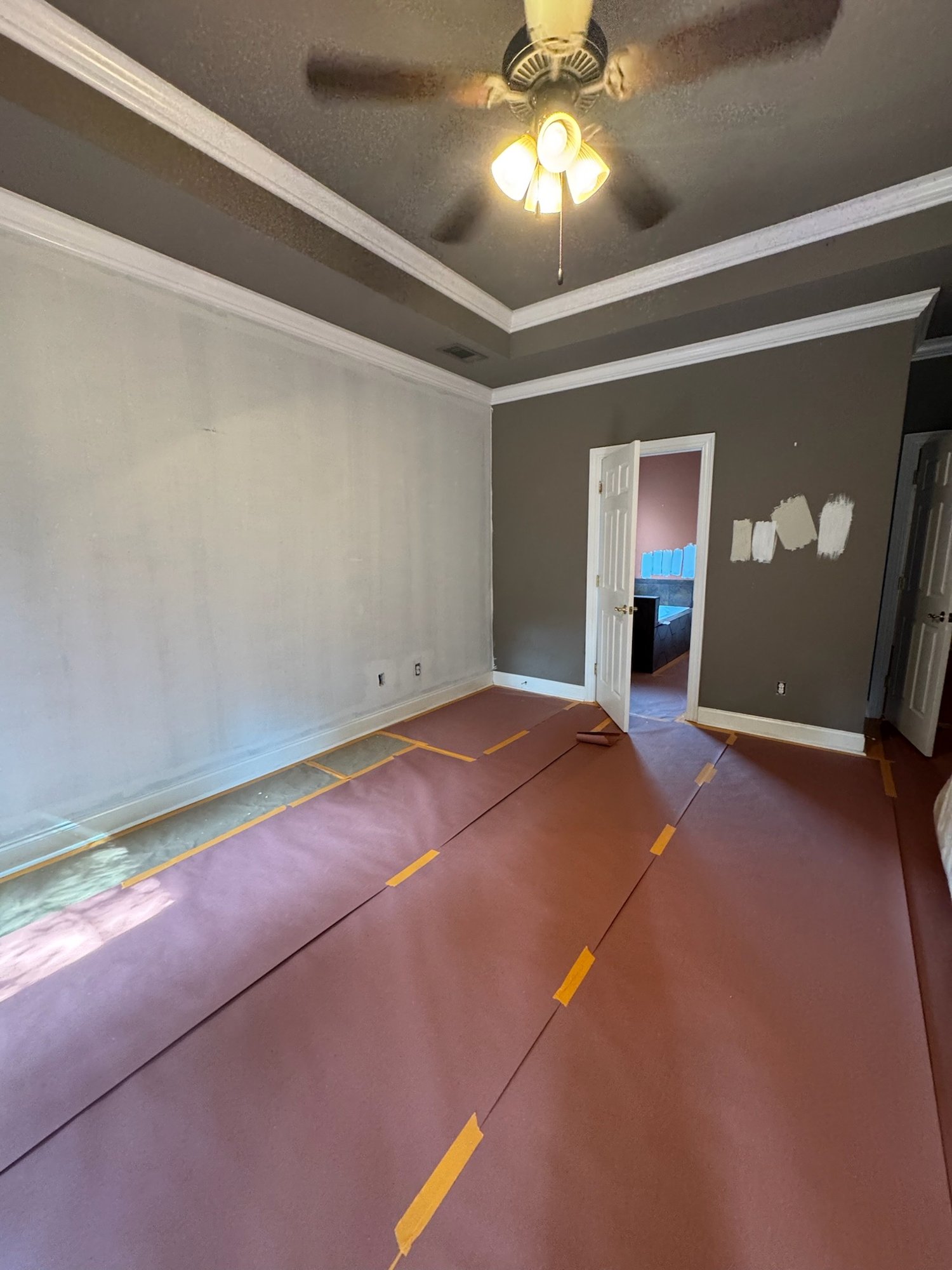
On a September 2025 interior job, our crew covered every floor with rosin paper, taped at the seams, before a drop of color went on. That’s the part of the job most homeowners don’t get to see, and it’s what keeps a paint job off the floors and furniture.
When you compare quotes, look at what prep is written into each one. A lower number often means less of that list.
Does the number of colors change the cost?
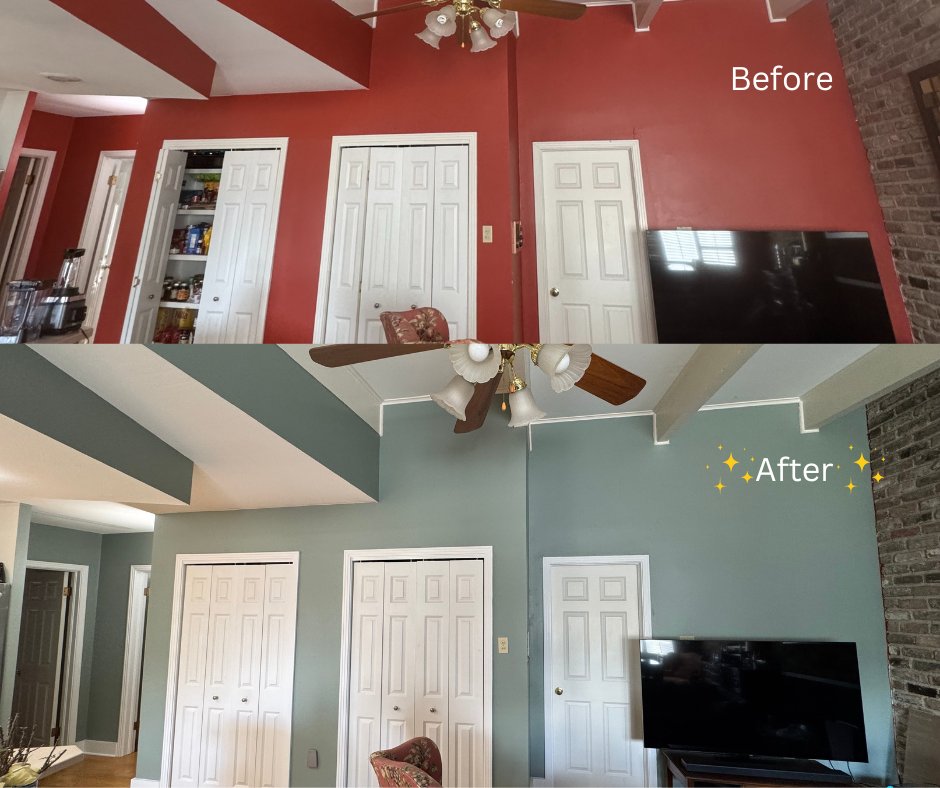
Yes. Each color change adds cutting-in time along every edge, and big jumps in color add coats. Going from a deep red to a light gray-green, which we did in a living room with a beamed ceiling, needs more coverage than repainting a beige room beige. On that September job, paint swatches went up on the walls before anything else, so colors could be compared in the room’s own light.
Picking paint finish matters as well. Most walls look and clean well in eggshell or satin, trim usually gets semi-gloss, and ceilings are usually flat. Using more finishes means more products and more time switching between them. Walls, ceilings, trim, doors and built-ins are all part of our interior painting service, and the estimate can cover any of them.
How do you get an accurate price for your home?
Start with our online estimator on the pricing page. Answer a few questions about your project and you’ll get a price range in about two minutes. It’s a starting point, and it’s useful for budgeting before you book anything.
For an exact number, book a free in-person estimate. We walk the rooms with you, take measurements, look at the condition of the walls and trim, and talk through colors and products. For most homes, you get an itemized proposal the same day, with labor, materials and prep listed separately. Very large projects get a full proposal with options within 48 hours.
Timing goes in the quote too. A single interior room typically takes a day, and a full interior can take five days or more depending on the house. If you’re planning around a move-in or a holiday, see how long interior painting takes before you set a date.
Frequently Asked Questions
Is the interior painting estimate free?
The interior painting estimate is free. We come to your home, walk the rooms with you, measure, check the walls and trim, and talk through what you want done. Most homeowners get an itemized proposal the same day. For very large projects, the full proposal with options follows within 48 hours.
How long does it take to paint a house interior?
Painting a house interior takes about a day for a single room, and five days or more for a full interior. The range depends on ceiling height, how much prep the walls need and how much trim there is. You get a specific timeline before the work starts.
Should ceilings and walls be painted at the same time?
Ceilings and walls are usually best painted in the same visit, ceiling first. Ceiling paint drips and roller spatter land on the walls below, so painting walls afterward covers any marks. If the ceiling is in good shape and the color isn’t changing, it can be left out of the scope.
What paint brands do you use for interiors?
For interiors we work mainly with Sherwin-Williams and Benjamin Moore, professional-grade lines that hold up in the New Orleans climate. The exact product depends on the room and the surface. A bathroom or kitchen calls for something different than a bedroom ceiling, and we go over options during the estimate.
Does painting an older home require lead-safe work?
Painting a home built before 1978 can require lead-safe work practices, because older paint layers may contain lead. Federal EPA rules govern how that paint is disturbed during sanding and scraping. It’s worth asking any painter how they handle it before you sign.
Big Picture Painting has a 5.0 rating across 50+ Google reviews, and every project is backed by our workmanship warranty. If you’re weighing an interior project this fall or winter, book a free in-person estimate or call (504) 399-5399 and we’ll walk the rooms with you.