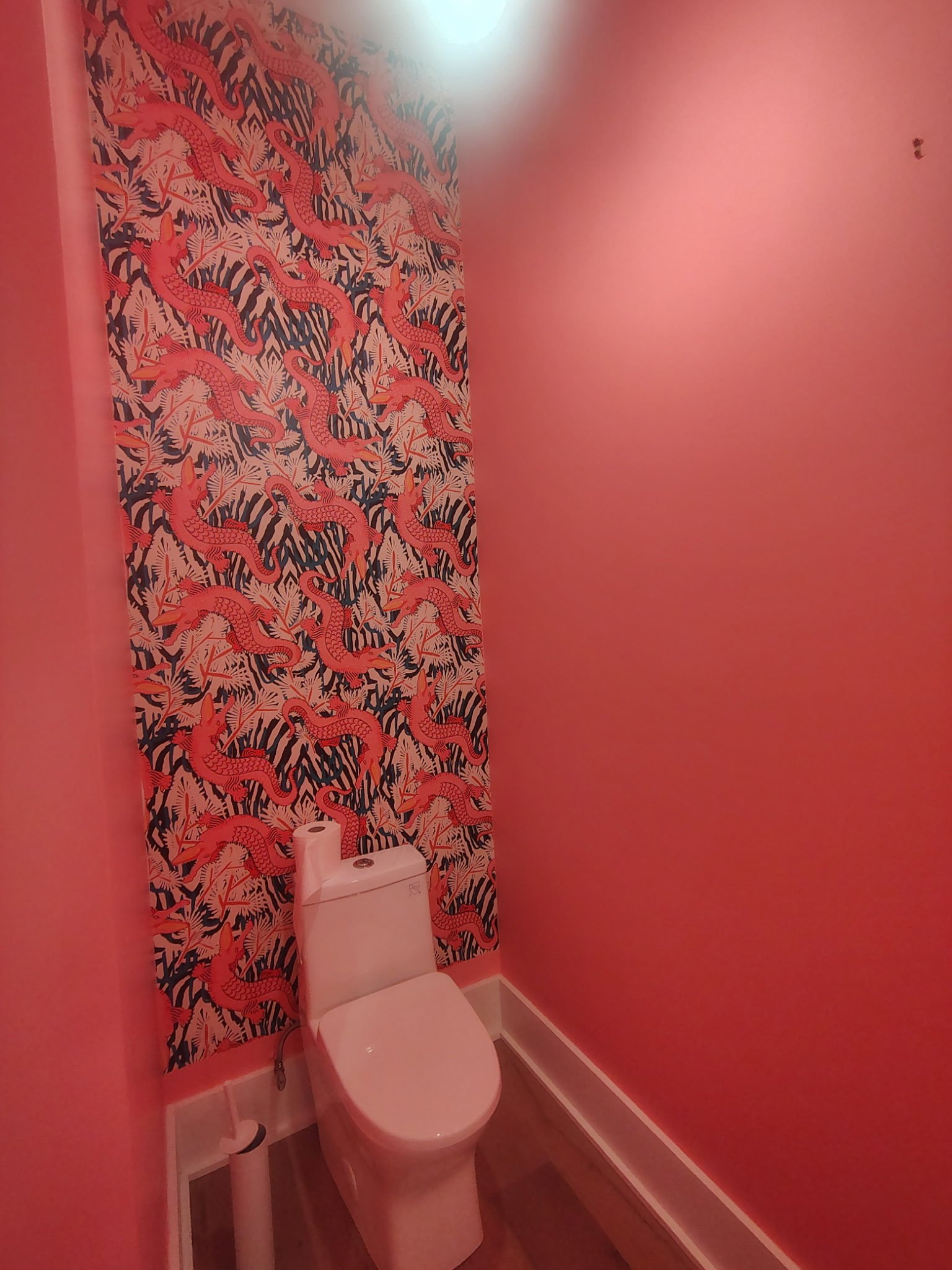
Yes, you can paint over wallpaper, and in some old houses it’s a smarter move than stripping it. It works when the paper is a single layer, tight to the wall everywhere, smooth and paper-faced, and when pulling it would tear up the wall underneath.
Plenty of painters will tell you to strip it every time. In a Marigny Creole cottage or an Uptown double, though, the paper might be glued straight onto old plaster, onto an older layer of paper, or onto drywall that wasn’t primed first. Pull it and the plaster’s face, or the drywall’s paper skin, can come away with it. A wallpaper job becomes a wall repair job.
Most rooms still end up stripped, and for good reason. Paint over paper is a cover-up that only lasts as long as the paste behind it holds, and this city’s damp air tests that paste every day. The checklist below sorts the two cases.
When is it OK to paint over wallpaper?
Only when the paper passes every item on the first list. If anything from the second list shows up, strip it.
Paint over it only if:
- The paper is firmly stuck everywhere, with no lifting seams, corners or bubbles.
- It’s one layer, not paper over paper.
- It’s a flat, paper-faced wallpaper, not vinyl, foil, grasscloth or a heavy embossed pattern.
- The wall underneath is sound, with no soft spots, water stains or cracks showing through.
- You can live with faint seam lines showing when low light rakes across the wall.
- Removal would do more damage to the wall than painting over it.
Strip it if:
- Seams or edges are lifting anywhere, including behind switch plates and along baseboards.
- It’s vinyl, foil or textured.
- There’s a water stain, mildew or a musty smell behind it.
- It’s in a bathroom, laundry room or kitchen where steam reaches the walls.
You can run a quick test yourself. In a closet or behind a door, slide a putty knife under a seam and lift. Big dry sheets that peel off cleanly mean removal will likely be easy. Paper that tears into small pieces and leaves a brown backing behind means it’s well bonded, and stripping will take patience.
How do you paint over wallpaper without bubbles?
Seal it with an oil-based or shellac-based primer before any water-based paint touches it. Latex paint soaks into the paper and softens the paste behind it, and that’s what makes paper blister and seams curl up a day after painting. A solvent-based primer locks the surface first.
Before priming, glue down any loose edges with seam adhesive, wipe the walls clean and lightly sand ridges at the seams. Some painters skim the seams with joint compound so they disappear under the finish. Once the primer is dry, regular interior wall paint goes on as it would over any wall.
What happens when you strip wallpaper in an older house?
Removal usually means scoring the paper, soaking it with water or a remover, scraping it off in sections and then washing away the adhesive left behind. That last step gets skipped more than any other. Leftover paste reacts with water-based paint and can make it crack or flake later, so the walls get washed until they no longer feel slick.
Older homes add two wrinkles. Plaster under the paper often has cracks and soft spots hidden for years, and those need repair before primer. If stripping turns up plaster damage, we’ll show you, and the painting waits until a plaster specialist has fixed it. And in a house built before 1978, the painted layers under the paper can contain lead, which changes how scraping and sanding are done. Our guide to lead-safe painting in New Orleans covers what to expect.
Wallpaper removal, drywall repair and painting are all part of our residential interior service, so stripping and painting can go on the same proposal.
Is painting over wallpaper cheaper than removing it?
Up front, yes. Painting over takes fewer hours than stripping, washing and repairing. Over the life of the wall, it can go the other way.
If the paper lets go a few years later, you’re stripping paper that’s sealed under paint. Water and steam can’t reach the paste through the primer, so that removal is slower and rougher on the wall than stripping bare paper would have been. Painting over is a fair choice when the paper passes the checklist. It’s a costly one when it doesn’t.
How do you decide for your own walls?
Look at each room separately. A dry bedroom with tight paper is a different case from a bathroom where the seams already curl. Many houses end up with both answers.
At a free in-person estimate, we check how the paper is holding, room by room, and talk through which walls can be painted over and which need stripping. Stripping adds days to a schedule, so read how long interior painting takes before you set a move-in date, and see how to prepare your home for painters for what to clear out first.
Frequently Asked Questions
Does humidity make painted wallpaper peel?
Humidity can make painted wallpaper peel or bubble, because moisture softens the paste behind the paper and the seams start to lift. In New Orleans that pressure lasts most of the year. A solvent-based primer, glued-down seams and steady air conditioning help, but in a bathroom or laundry room the paper is usually better stripped.
Can you paint over vinyl wallpaper?
Vinyl wallpaper is a poor surface for paint. Its plastic face resists adhesion, and many vinyl papers are made to peel apart in layers, so paint can pull the top layer loose. Peeling off the vinyl face, then soaking and scraping the backing, is usually the better route before painting.
How can you tell if wallpaper is safe to paint over?
Wallpaper is safe to paint over when it’s a single layer, firmly stuck at every seam and edge, paper-faced and smooth, with a sound wall behind it. Press along the seams and look behind switch plates. Any lifting, bubbling, mildew or soft spots mean the paper should come off first.
Does removing wallpaper damage plaster walls?
Removing wallpaper can damage plaster walls when the paper was glued straight onto unsealed plaster or when the plaster is already loose. Soaking the paper slowly and scraping carefully keeps damage small. Gouges and soft spots that show up afterward need a plaster specialist’s repair before the walls are primed and painted.
Should walls be primed after wallpaper is removed?
Walls should be primed after wallpaper is removed, once the leftover paste has been washed off. Paste residue reacts with water-based paint and can make it crack or flake. Washing until the walls no longer feel slick, then sealing them with a primer suited to the surface, gives the new paint something sound to hold.
Our Google profile shows a 5.0 rating across 50+ reviews, and on every project Kade or a senior crew member is on site each day, so you’ve got someone to ask about the walls. If there’s wallpaper you’re ready to deal with, book a free in-person estimate or call (504) 399-5399.